



A New Nuclear Reality
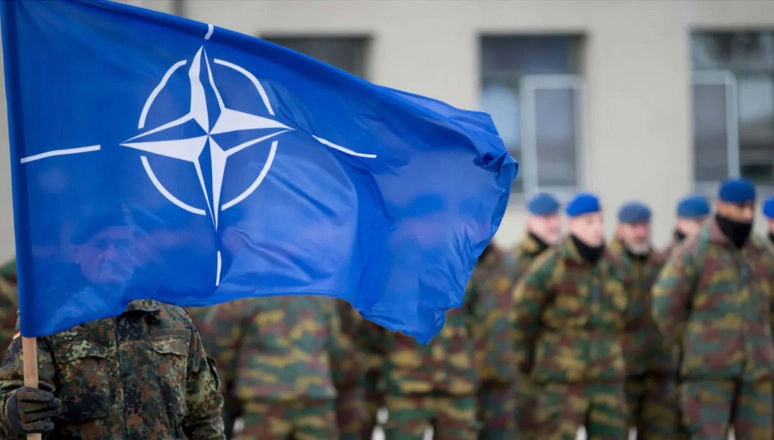
Deterrence still works, but the nuclear landscape has shifted considerably since 2020. China is growing its arsenal, Russia is using more nuclear rhetoric, regional powers are pushing the limits of non-proliferation, and new technologies are adding pressure to already tense situations. NATO’s nuclear posture remains central to Euro‑Atlantic security and is described by allied officials as robust, credible, and designed to protect every ally. Despite recent political tensions, the problem is not that NATO is weak, but that the strategic environment is more crowded, less predictable, and more interconnected than ever before. This article looks at how NATO’s nuclear deterrence was positioned in 2025 and sets out a realistic outlook for 2026.
Russia and the Return of Nuclear Signalling
Since the start of Russia’s full‑scale war against Ukraine, Moscow has frequently used nuclear rhetoric when talking about the conflict and its tensions with NATO. This has included references to its strategic forces, public statements about readiness, and repeated reminders that Russia is a nuclear power. In parallel, Russia has deployed nuclear‑capable systems to Belarus, adding an extra layer of uncertainty on NATO’s eastern flank and shortening reaction times in a crisis.
Russia has also adjusted its formal nuclear doctrine. Recent principles and draft changes discussed by Russian officials have widened the conditions under which use of nuclear weapons may be considered, including references to attacks by non‑nuclear states, if such attacks are supported by nuclear‑armed countries. This trend suggests a lower perceived threshold in some scenarios and is intended to strengthen Russia’s coercive signalling in crises. So far, NATO’s response has attempted to project clarity, unity, and restraint: the alliance has avoided mirroring Russia’s rhetoric, reaffirmed that a nuclear war cannot be won and must never be fought, and avoided direct military escalation around Ukraine. Looking into 2026, these patterns point to a strategic environment where Russian nuclear signalling is likely to remain intense, and where consistent messaging and careful crisis management by NATO will continue to be key to preventing miscalculation.
China’s Emergence as a Second Nuclear Peer
China’s nuclear build‑up is one of the most important shifts of the past few years. Around 2020, outside estimates placed China’s warhead stockpile at roughly 200. Recent US defence reporting suggests that China has since nearly tripled this number, with more than 500 operational warheads by 2023 and over 600 by mid‑2024, with a trajectory that could reach about 1,000 warheads by 2030 and up to 1,500 by 2035 if current trends continue. Open‑source work by specialist groups also indicates a rapidly expanding missile force, including intercontinental ballistic missiles, new silos, and a growing range of sea‑ and air‑launched systems.
This expansion suggests that China is moving away from a narrow “minimum deterrence” posture towards a more flexible and diverse nuclear force, including options for regional and long‑range deterrence, and possibly more tailored signalling in a crisis. For NATO, this does not mean an immediate nuclear stand‑off in the Euro‑Atlantic area, but it does mean that the United States, as the core nuclear ally, must consider deterrence in both the Euro‑Atlantic and Indo‑Pacific theatres at the same time. The result is that NATO now faces two nuclear‑armed systemic rivals, Russia and China, even if its direct nuclear planning remains focused on the Euro‑Atlantic region. This is markedly different from the Cold War, when the main nuclear interaction was essentially bipolar, and it underlines why updated strategic thinking is needed.
Iran, North Korea, and Hybrid–Nuclear Risks
Beyond Russia and China, other actors and technologies are also adding important layers of complexity to the nuclear picture. Despite damage by US airstrikes during the 2025 12-Day War, Iran has continued to advance its nuclear programme. Recent reports from the International Atomic Energy Agency (IAEA) have highlighted that the country's government has accumulated over 400 kilograms of uranium enriched up to 60% purity, a level technically close to weapons‑grade, and that monitoring and verification have been restricted by reduced access and the removal of some cameras and inspectors. While Iran has not taken a political decision to build a nuclear weapon, this stockpile and the lack of transparency present serious risks for regional stability and for NATO’s broader security environment.
North Korea, meanwhile, has continued to expand and test its missile and nuclear capabilities. United Nations briefings in early 2025 have underlined that Pyongyang is “ploughing ahead” with ballistic missile launches, including systems potentially capable of carrying nuclear payloads and reaching longer ranges. These developments come as North Korea approaches the end of a multi‑year military development plan in which nuclear and missile forces have been clear priorities. On top of this, advances in cyber capabilities and artificial intelligence are raising questions about the resilience and integrity of nuclear command, control, and communications (NC3), from possible cyber intrusions into warning systems to the risk of automated decision‑support tools influencing crisis choices. The actions of Iran and North Korea are not central to NATO's nuclear posture in the same way as Russia, but their actions, combined with technological change, shape the wider risk calculus and increase the number of ways a crisis can escalate or spread.
NATO’s Modernisation and Integrated Deterrence
NATO has already taken significant steps to adapt its deterrence posture. The 2022 Strategic Concept reaffirmed that nuclear weapons remain the supreme guarantee of the security of allies, and committed to maintaining NATO as a nuclear alliance as long as nuclear weapons exist. Since then, allied leaders have updated posture and plans to reflect the changed threat environment, including more focus on high‑intensity conflict, more visible exercises, and renewed attention to nuclear consultation among allies.
On the capability side, NATO is modernising its dual‑capable aircraft and associated systems. The US B61‑12 gravity bomb is being introduced to replace older variants, improving accuracy and safety while keeping overall numbers modest. The F‑35A has been certified to carry the B61‑12, giving the alliance a more survivable and versatile delivery platform that can operate in contested air environments. In 2025, the United Kingdom announced plans to acquire F‑35A aircraft and join NATO’s nuclear mission, a notable step in burden‑sharing and allied participation in nuclear deterrence beyond the traditional host nations. Alongside nuclear forces, NATO is also developing what it calls “integrated deterrence” across conventional, cyber, and space domains, including a stronger integrated air and missile defence posture and new structures to coordinate cyber defence and space activities. These measures show that adaptation is already under way in practice, not just in strategy documents.
The Logic of Deterrence in a Double‑Crisis Era
The central strategic challenge for NATO is no longer managing a single, clearly defined nuclear stand‑off, but handling the risk of multiple, overlapping crises. In one scenario, Russia could generate pressure in the Euro‑Atlantic area while a separate crisis unfolds in the Indo‑Pacific involving China, each with its own nuclear and conventional dynamics and each affecting allied decision‑making. This possibility of “double crises” stretches political attention, planning assumptions, and, for the United States in particular, strategic forces and high‑end conventional assets.
In such an environment, deterrence must be flexible, scalable, and coordinated across domains; It is not enough to rely only on static nuclear numbers. the credibility of deterrence depends on the ability to signal clearly, to move forces in a measured way, and to reassure allies without provoking escalation. Strategic communication, alliance unity, and predictable decision‑making processes are therefore essential for managing crises involving nuclear threats. NATO’s integrated deterrence approach, which links nuclear, conventional, cyber, and space tools within a single political strategy, is designed to provide this sort of flexibility. The core analytical point is that deterrence success in a double‑crisis era depends at least as much on clarity and coordinated planning as it does on warhead totals.
Outlook for 2026: Scenarios and Indicators
Looking to 2026, several broad trajectories appear plausible. In a best‑case scenario, NATO continues its modernisation on schedule, further improves consultation and crisis communication, and uses clear signalling to reduce the risk of miscalculation. In this pathway, some space might reopen for arms control or risk‑reduction talks, whether with Russia, with China, or in regional settings, even if a full return to traditional arms control treaties remains unlikely in the near term.
A more likely baseline sees persistent dual pressure from Russia and China, ongoing Russian nuclear rhetoric, continued Chinese build‑up, and intermittent crises in regions such as the Middle East and the Korean Peninsula. Here, NATO deterrence remains credible and adaptive, but the environment stays tense and crowded. A risk‑case scenario would involve overlapping crises, for example a sharp escalation in Ukraine or the Baltic region combined with a Taiwan or South China Sea emergency, plus renewed nuclear steps by Iran or further large‑scale testing by North Korea. Under this scenario, the danger of misperception or unintended escalation would be higher, even if no actor seeks a direct nuclear confrontation.
Several indicators will be important to watch through 2026. On the Russian side, any further formal changes to nuclear doctrine, large‑scale strategic exercises close to NATO borders, or additional deployments of nuclear‑capable systems in Belarus would be significant. For China, sustained growth in warhead numbers, new silo construction, and changes in declared doctrine or alert practices are worth noting. In the Middle East and on the Korean Peninsula, trends in Iran’s enrichment levels, IAEA access, and North Korean testing patterns will affect the wider risk picture. Within NATO, decisions on B61‑12 deployment timelines, the role of F‑35A fleets, outcomes of nuclear consultation processes, and the evolution of integrated deterrence concepts will signal how the alliance intends to keep its deterrence posture credible in this environment.
Deterrence that Matches the Moment?
NATO’s nuclear umbrella is likely to remain the cornerstone of European security for as long as nuclear weapons exist. And far from standing still, the alliance has already moved to update its deterrence posture, from modernising dual‑capable aircraft and warheads to reinforcing consultations and exercising its forces more regularly. At the same time, the surrounding nuclear landscape is becoming more complex, with Russia’s doctrine and signalling, China’s rapid build‑up, and regional actors and technologies all adding pressure points.
In this double‑crisis era, effective deterrence is less about simply fielding more weapons and more about ensuring that NATO’s posture is modern, well‑communicated, and resilient in the face of shocks. Clear signalling, strong alliances, and careful crisis management will be just as important as hardware. If NATO continues to combine credible nuclear capabilities with integrated deterrence across other domains and a steady political line, it will be well placed to manage the nuclear risks of 2026 and beyond. However, if political fractures in the alliance continue to grow, it will become ever more challenging to manage the multiple, overlapping crises which could emerge this year. Only time will tell if the alliance manages to stand firm and navigate the unpredictable tides of a multipolar world.