

Regional Reorganisation
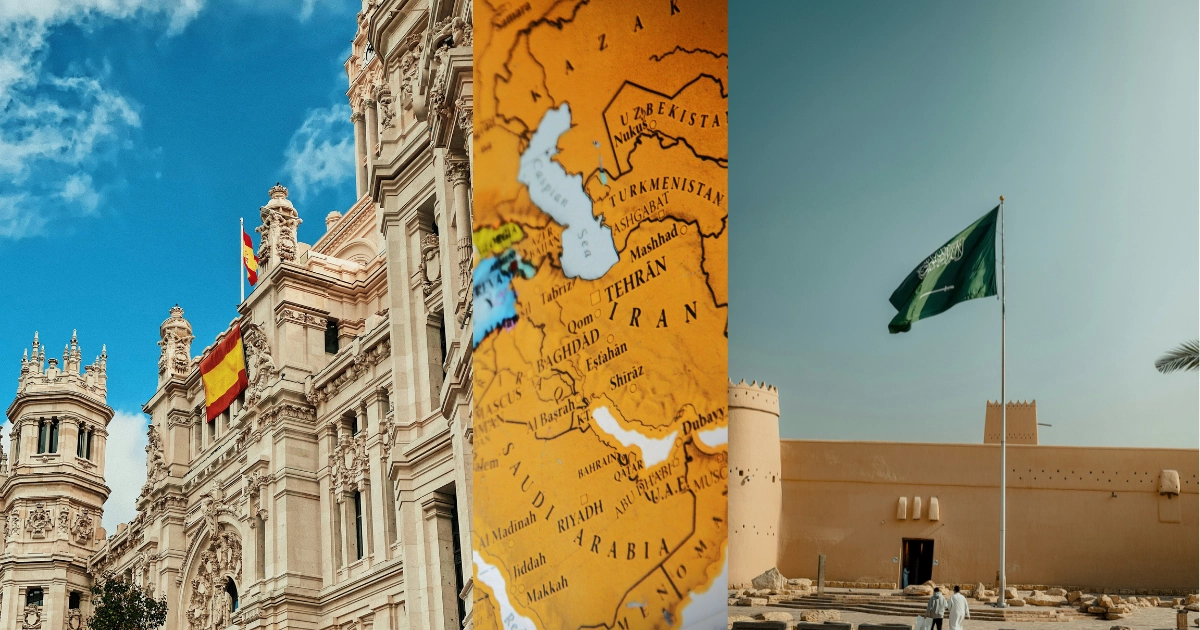
In the fog of war, the Middle East’s political landscape is undergoing a rapid strategic reorganisation. The ongoing conflict with Iran has not only intensified regional insecurity, but has also accelerated shifts in diplomatic and economic alignments across the Gulf and Europe. What initially appeared to be isolated developments increasingly resemble interconnected efforts by states attempting to reposition themselves within a changing international order shaped heavily by U.S. leverage, Gulf competition, and energy politics.
One of the clearest examples emerged on April 28th, 2026, when the United Arab Emirates announced its withdrawal from OPEC, the Organisation of Petroleum Exporting Countries. For decades, OPEC functioned as a coordinating mechanism among oil-producing Gulf states, allowing members to collectively influence production levels and, by extension, global oil prices. The UAE officially framed its departure around ambitions to expand production capacity beyond the limitations imposed by collective quotas. According to reporting from Al Jazeera and CNBC, Emirati officials argued that existing restrictions no longer aligned with the country’s long-term economic strategy.
At the same time, regional reporting has also pointed toward growing frustration within the Emirati leadership over continued Iranian strikes on UAE territory and what officials reportedly viewed as insufficient assistance from neighbouring Gulf states, particularly Saudi Arabia. Within this context, the Iran conflict may also provide political cover for the UAE to pursue a more independent foreign and energy policy strategy outside the Saudi-dominated OPEC framework.
Such a shift carries broader geopolitical implications. By exiting OPEC, the UAE no longer needs to coordinate oil production strategy as closely with its regional neighbours, most notably Saudi Arabia. This potentially gives Abu Dhabi greater flexibility to align energy policy with broader strategic interests, including closer coordination with Washington on oil production and regional security matters.
The timing of the UAE’s departure is particularly notable given recent developments in U.S.-Iran relations. U.S. President Donald Trump had publicly suggested that a peace agreement with Iran was near before subsequently suspending negotiations. While the absence of a diplomatic settlement risks prolonging regional instability, it may simultaneously increase Washington’s leverage among Gulf states seeking stronger security guarantees against Iran. In this environment, the UAE increasingly appears to view closer alignment with the United States as both a diplomatic hedge and a counterbalance to Saudi regional influence.
These developments also reflect growing competition between the UAE and Saudi Arabia over leadership within the Gulf. Saudi Arabia continues to view itself as the region’s dominant power, particularly as Iran’s position weakens under sustained military pressure. Meanwhile, the UAE has become increasingly aware of the risks associated with overdependence on Saudi-led regional structures and appears more willing to pursue an autonomous strategic course when its interests diverge from Riyadh’s.
This broader regional realignment becomes even more significant when examined alongside changing rhetoric and diplomatic positioning in Europe, particularly in Spain.
The Saudi-Spanish Connection
While the UAE reassesses its relationship with Saudi Arabia and OPEC, Saudi Arabia itself appears to be expanding its international partnerships elsewhere. On April 27th, 2026, ABC (España) reported that Saudi Arabia’s Public Investment Fund had redirected major investment efforts toward Riyadh Air, the kingdom’s flagship aviation project. Although the airline has yet to begin commercial operations, Crown Prince Mohammed bin Salman reportedly intends for Riyadh Air’s first commercial route to connect directly with Madrid.
The choice of Spain is politically significant. In recent months, Spain has emerged as one of the strongest European critics of Trump’s military posture toward Iran. Prime Minister Pedro Sánchez has repeatedly resisted U.S. demands surrounding the Strait of Hormuz and broader regional escalation. Reports within U.S. political circles have even floated the possibility of reassessing Spain’s position within NATO, reflecting rising tensions between Madrid and Washington.
Spain’s position increasingly contrasts with that of France, Germany, and the United Kingdom, whose governments have generally attempted to establish some distance from Trump while avoiding outright confrontation. Spain remains relatively unique within Western Europe as the only major governing coalition still firmly associated with the contemporary European left, particularly at a moment when left-wing parties elsewhere have faced significant electoral decline or ideological repositioning toward the political centre (Keir Starmer in the UK and Friedrich Merz in Germany). Addtionally, this left-wing coalition led by Sánchez is also receiving seemingly positive feedback from the Spanish electorate.
This political context may help explain Madrid’s growing willingness to pursue diplomatic and economic diversification beyond traditional Western alignments. For instance, Spain also possesses longstanding historical and economic ties with Saudi Arabia. These connections expanded significantly during the reign of former King Juan Carlos I, whose relationship with Saudi elites later became the subject of corruption investigations involving the construction of a high-speed rail project in the kingdom. Reports suggest Juan Carlos possibly accumulated upwards to €65 million. Although Juan Carlos abdicated in 2014, and later faced mounting legal and political scrutiny, Saudi-Spanish economic ties continued to deepen, rather than diminish.
By 2024, Saudi investment ambitions in Spain had accelerated substantially. Riyadh Air became linked to a €300 million agreement involving Madrid’s Metropolitano Stadium, while Saudi investment structures were expected to contribute tens of millions of euros annually through broader commercial partnerships. These projects align closely with Saudi Arabia’s wider economic diversification strategy, which seeks to reduce dependence on oil revenues by expanding investment and influence abroad.
For Saudi Arabia, Spain represents both a strategic economic opportunity and a valuable European partner at a time of growing competition with the UAE for regional and international influence. For Spain, Saudi investment offers economic benefits alongside greater diplomatic flexibility as Madrid attempts to distinguish its foreign policy positioning from Washington’s approach toward Iran.
A More Flexible Geopolitics
Taken together, these developments illustrate how rapidly international alignments can shift during periods of conflict and uncertainty. As the UAE moves toward greater strategic coordination with the United States, Saudi Arabia appears increasingly focused on consolidating economic and political relationships elsewhere, including within Europe. Spain, meanwhile, is attempting to balance opposition to U.S. regional escalation with continued engagement with Gulf powers whose own positions toward the conflict remain highly complex.
Indeed, despite Spain’s criticism of Washington’s posture toward Iran, Saudi Arabia itself has reportedly continued to privately encourage sustained U.S. pressure against Tehran. This apparent contradiction highlights a broader reality underlying contemporary international relations: states are rarely guided by ideological consistency alone. Instead, alliances increasingly revolve around strategic utility, economic opportunity, and leverage.
In many respects, the current geopolitical landscape is defined less by stable blocs and more by flexible partnerships shaped by immediate interests. Spain can criticise U.S. militarism while simultaneously deepening economic ties with Saudi Arabia. Saudi Arabia can maintain close relationships with Washington while competing with the UAE for regional leadership. The UAE, meanwhile, can distance itself from Saudi-led institutions while strengthening cooperation with the United States.
Ultimately, these developments suggest that the Iran conflict is not simply producing military consequences. It is also accelerating the fragmentation and reorganisation of alliances across both the Middle East and Europe. Whether these shifts prove temporary or become enduring features of a new regional order remains unclear. What is increasingly evident, however, is that the strategic map surrounding the Middle East is becoming more fluid, more transactional, and considerably more competitive.