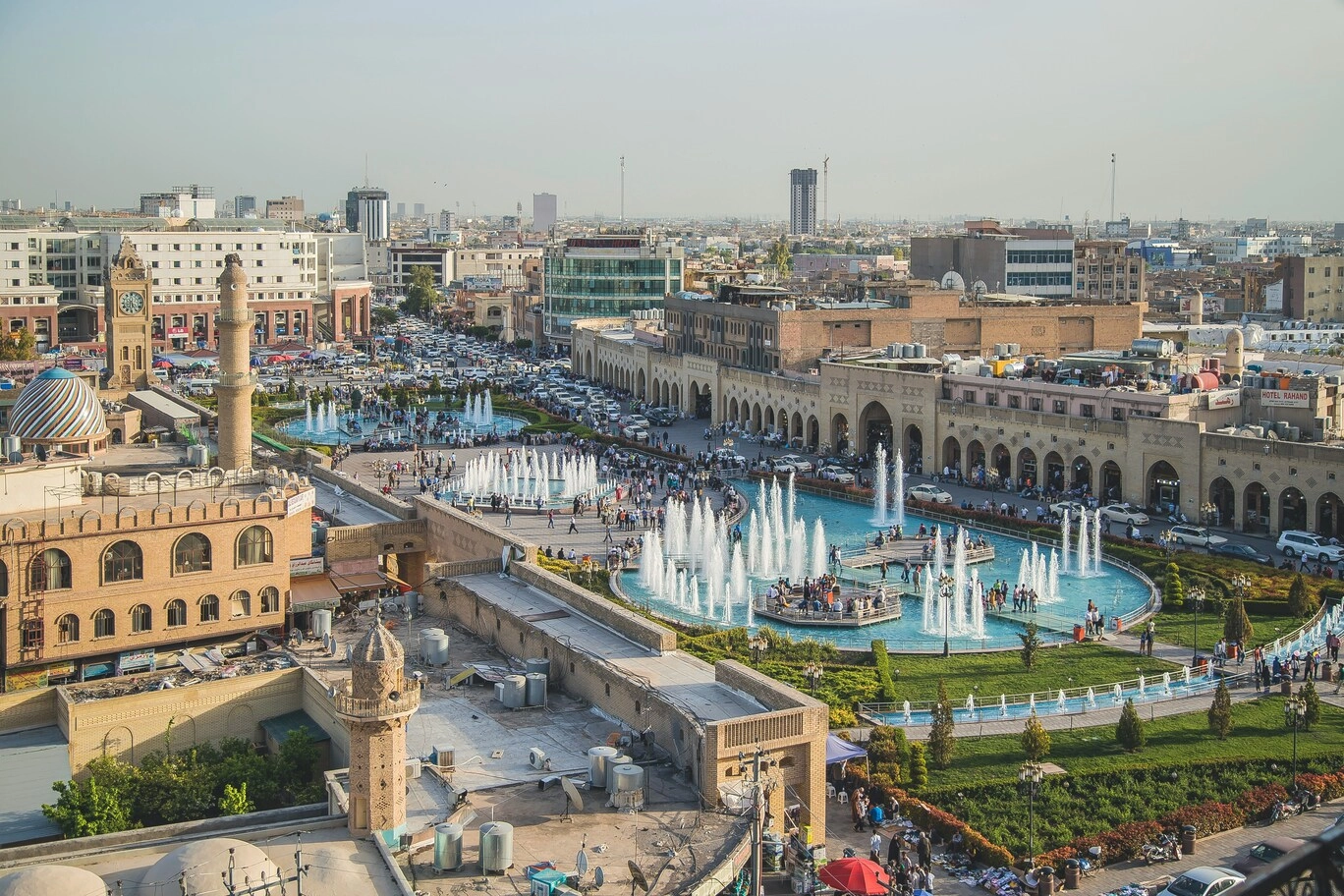

What is there to say about the country of my birth that hasn’t already been said? Iraq carries within it thousands of years of history, of beauty, art, war, and intellectual life. It is a place that reflects, perhaps more than most, the full spectrum of human existence. Yet in modern times, Iraq has become something else: a projection screen for the world’s assumptions.
When I travel and say I am from Iraq, I can almost see the mental search begin. People sift through fragments of news they have absorbed over a lifetime. “Saddam Hussein…?” they offer cautiously. From there, the reaction splits. From some, often in parts of the East, there is immediate recognition: “Ah, Saddam; Iraq, beautiful country, strong leader.” From others, especially in the West, there is hesitation, even discomfort. They look carefully, unsure how I understand Saddam, but confident in how they have been taught to.
Saddam Hussein is controversial, this much is obvious. His fall evokes comparisons with figures like Gaddafi, Thomas Sankara, or Patrice Lumumba, leaders whose downfalls were shaped, in part, by external forces and geopolitical contestation. At the time of his removal, many Iraqis were exhausted by his rule. Yet time reshapes memory. In the years that followed, through rebuilding, sectarian violence, the emergence of ISIS, protests, and persistent political paralysis, some began to view him less as a dictator and more as a figure who, for all his faults, maintained a form of cohesion that no longer exists.
Because love him or hate him, one of Saddam’s core fears has proven prescient. He feared Iranian influence; that fear now defines Iraq more than any single legacy of his rule.
Saddam governed as a Sunni leader over a Shia-majority population, often with paranoia, but not without reason. History shows us this pattern: a minority ruling over a majority, often sustained by a fragile and externally pressured balance. Saddam looked across his border and saw a revolutionary Iran, a Shia-led state with ideological ambition and geopolitical reach. He understood that influence does not always arrive through invasion, it can emerge through identity, networks, and alignment. Iran openly called for the collapse of his regime. His response was repression, excessive and brutal, but rooted in a fear that the state itself might fracture.
That fracture is now reality.
Today, Iraq exists, but its sovereignty is diluted. It operates less as a fully independent state and more as a contested space: shaped, pressured, and at times directed by forces beyond its control. Over the past year in particular, Iraq has increasingly been implicated in a broader regional conflict, not through the will of its people, but through its position. Iraqi territory is used, Iraqi actors are mobilized, and Iraqi consequences are endured, yet Iraqis themselves neither choose nor meaningfully control this involvement.
This is not simply an observation. It is supported by the research. Academic work over the past decade has outlined a “multi-layered influence model,” in which Iran sustains power in Iraq through a combination of militias, political integration, and parallel structures that both operate within and outside the state. Reports indicate that such networks allow Tehran to embed influence deeply while preserving flexibility.
At the same time, scholars note that this influence is not absolute. A 2021 study following the killing of Qassem Soleimani found that while Iran continued to exert “considerable influence” in Iraq, it also faced growing internal divisions among its allies, rising anti-Iranian sentiment, and a gradual erosion of political leverage.
What this reveals is not control in the traditional sense, but entanglement. A system in which Iraq cannot easily disentangle itself from the forces shaping it.
This entanglement becomes most visible in moments of conflict. Reports in recent months suggest that Iraq has become a space through which external confrontations are projected. There are indications that foreign actors have operated militarily within or over Iraqi territory, that neighboring states have participated in or contributed to escalatory dynamics affecting Iraq, and that regional powers openly frame Iraq as a front with immanent repercussions if the country does not assert control over armed groups operating within its borders.
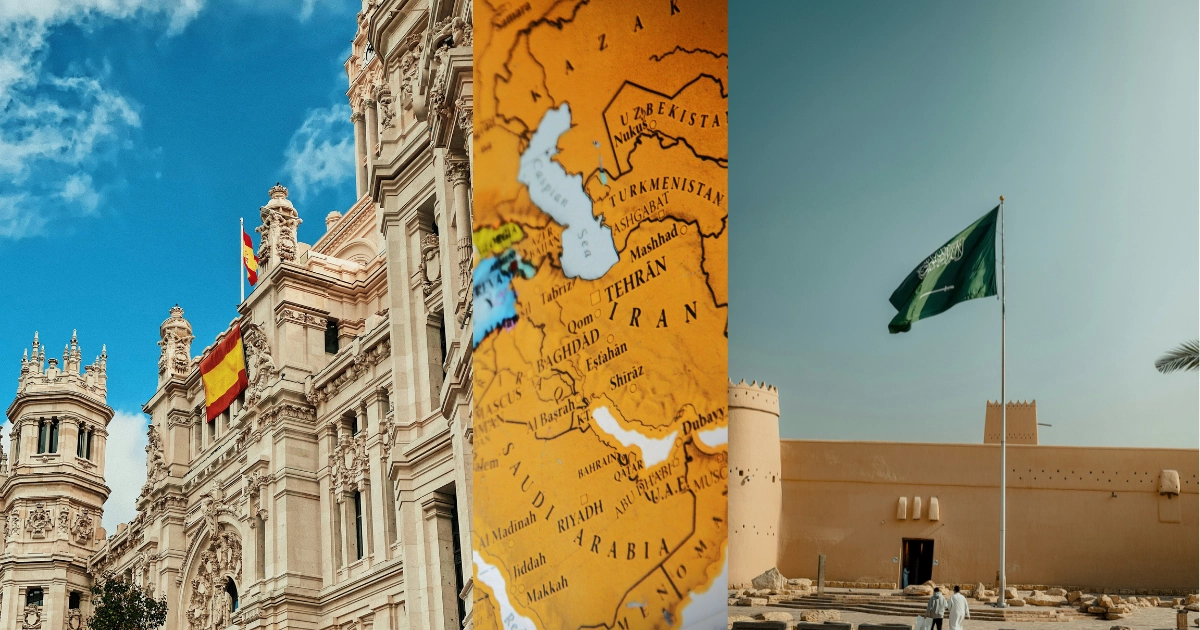
Reports indicate, for instance, that foreign military infrastructure or operational presence has been established in remote Iraqi regions, raising questions about territorial sovereignty. Other reports point to instances of strikes or military actions involving regional actors such as Saudi Arabia or Kuwait, either directly or indirectly affecting Iraqi space. Likewise, public statements from Gulf states, including the United Arab Emirates, have emphasized that Iraq must assert control internally if it seeks to avoid becoming a target within broader regional confrontations.
Whether each incident is contested, misreported, or politically framed is almost secondary. What matters is the pattern they collectively suggest. Iraq is being treated, externally, not as a neutral sovereign state, but as an operational environment. A place where influence is exercised, responses are triggered, and messages are sent.
This is the deeper consequence of weakened sovereignty.
When militias operate with significant autonomy, when political authority is fragmented, and when external actors calculate risk and response based on presence inside Iraqi territory, Iraq ceases to function as a clear decision‑maker in its own fate. It becomes a medium through which others act.
This raises a difficult question: to what extent does Iraq, as a fully independent political actor, still exist?
And perhaps more importantly, to what extent do Iraqis themselves fully recognize this condition, or feel empowered to challenge it?
None of this absolves Saddam Hussein, nor does it romanticize his rule. But it forces a reassessment. The fear that shaped much of his policy was not imagined, it was rooted in a geopolitical logic that did not disappear with him. If anything, it intensified.
Iraq today stands at the intersection of competing powers, caught between influence and instability. The United States bears responsibility for dismantling the state without securing its future. Iran bears responsibility for embedding itself within that vacuum in ways that prioritize its own strategic depth.
And Iraqis are left navigating the consequences.
We are left to ask whether Iraq will ever be allowed to exist on its own terms: free not only from dictatorship, but from being shaped, persistently and quietly, by the ambitions of others.